For anyone looking to catch the racing bug, the first question is almost always: “Should I head to the local indoor centre or find an outdoor circuit?” Whether you’re a casual hobbyist or an aspiring professional, understanding the fundamental differences between these two environments is crucial to your progression.
While both offer the thrill of wheel-to-wheel combat, they are practically different sports when it comes to technique, vehicle dynamics, and the physical toll on your body. In this guide, we’ll break down the nuances of indoor vs. outdoor karting to help you decide where to put your seat time.
The Indoor Experience: Technical Precision and Instant Torque
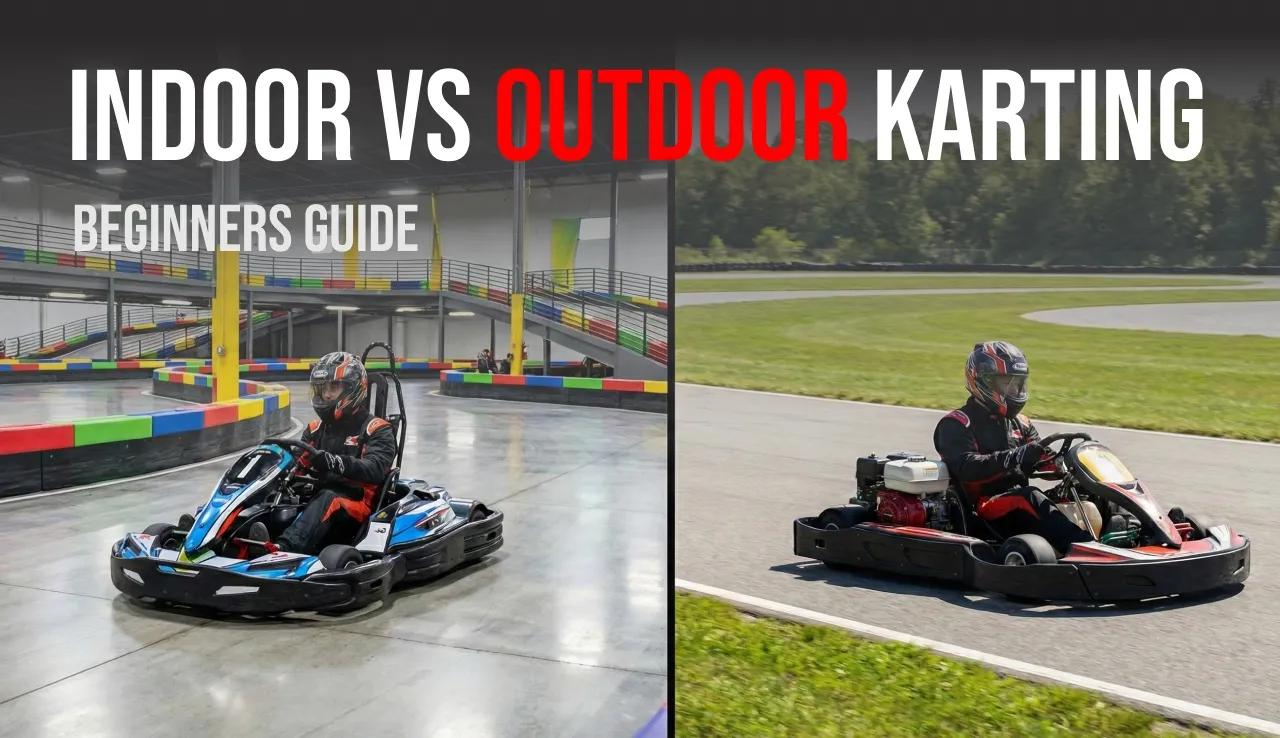
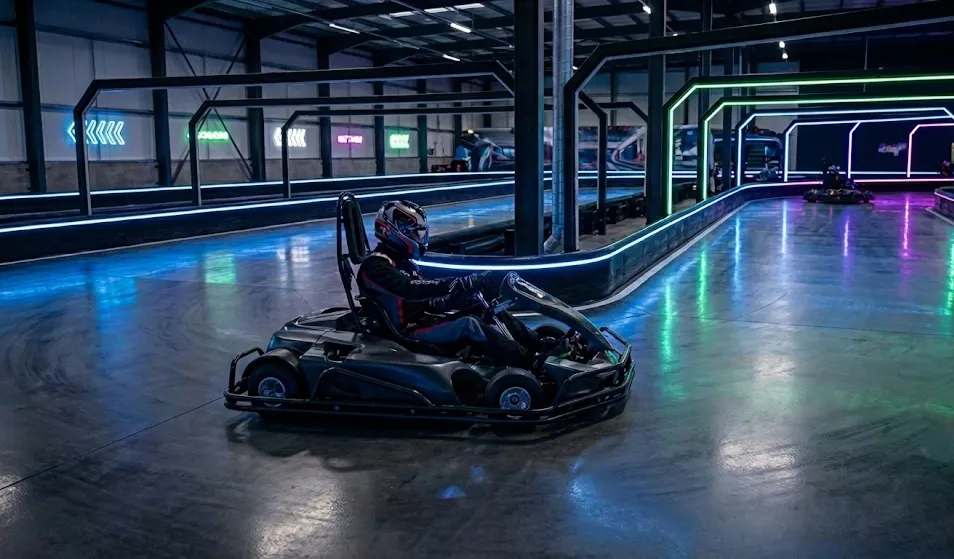
Indoor karting is the primary gateway for most people to experience their first taste of motor racing. These facilities are typically located in urban areas, often in converted warehouses or malls, making them highly accessible year-round regardless of the weather.
Electric Power and Handling
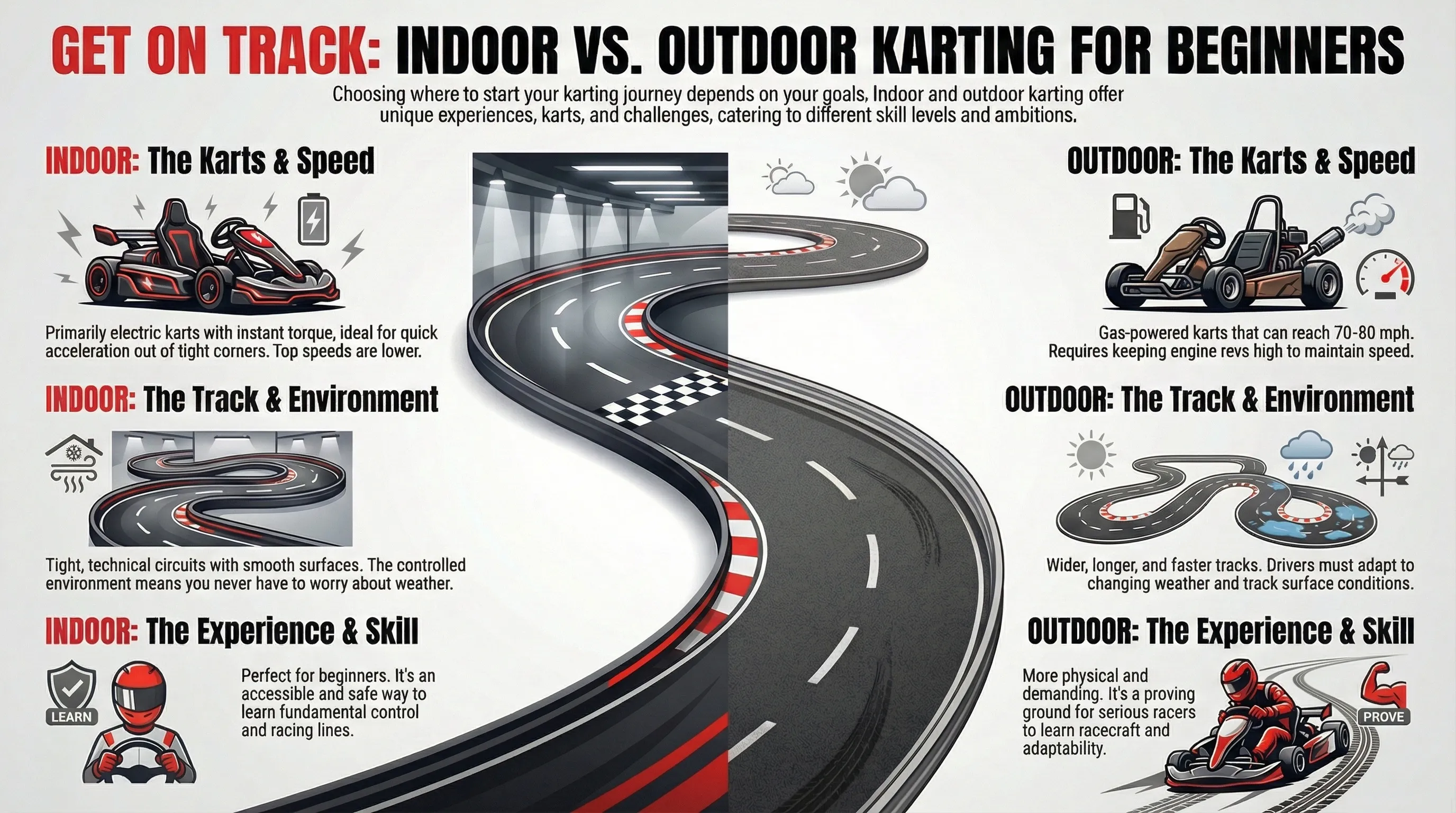
Most modern indoor tracks utilise electric karts. Unlike gas engines that need time to reach their peak RPM, electric motors provide instant torque from a standstill. This results in rapid acceleration out of tight corners, though they generally have lower top speeds than their outdoor counterparts. One major handling advantage is weight distribution; electric karts often have batteries distributed evenly, leading to a more balanced feel and better steering in tight turns.
Technical, Controlled Environments
Indoor tracks are characterized by being tight, technical, and often multi-level. The surfaces are usually smooth concrete or coated wood, providing consistent grip levels that don’t change mid-session. This environment is perfect for beginners to focus on “hitting their marks” and mastering racing lines without the distraction of wind, sun glare, or rain.
Ready to try indoor karting? Browse all 19 indoor tracks across Australia
The Outdoor Experience: Speed, G-Forces, and the Elements
If indoor karting is the “gateway,” outdoor karting is where the sport truly begins to resemble professional motor racing.
Raw Speed and Gas Engines
Outdoor circuits are designed for gas-powered karts that can reach speeds of 70-80 mph, with high-end Superkarts exceeding 150 mph. These karts require a different driving style; because they are petrol-powered, keeping the engine revs high is vital to maintaining momentum. Additionally, since the engine is typically mounted on one side, you may notice a slight handling bias that requires adaptation.
Track Evolution and Adaptability
Unlike the static environment of an indoor track, outdoor asphalt “evolves”. As karts lap the circuit, they lay down rubber on the racing line—a process that increases grip but can also lead to “graining,” which affects tyre performance. You also have the “forces of nature” to contend with: scorching sun can heat the track surface, while a sudden rain shower can instantly turn a high-grip circuit into a skating rink.
Physicality
Outdoor racing is significantly more physically demanding. The higher speeds result in much greater lateral G-forces and steering loads. Furthermore, outdoor tracks are often bumpier than smooth indoor floors, which can be tough on your ribs and neck.
Want the real racing experience? Explore all 43 outdoor tracks in Australia
Key Technical Differences at a Glance
| Feature | Indoor Karting | Outdoor Karting |
|---|---|---|
| Kart Type | Mostly Electric | Mostly Gas-powered |
| Track Surface | Smooth concrete/coated | Asphalt/Tarmac |
| Top Speed | Lower (approx. 30-45 mph) | High (70-80 mph+) |
| Environment | Controlled (No weather) | Variable (Sun, rain, wind) |
| Cost | ~$25-$50/session (10 mins) | ~$35-$55/session (10 mins) |
| Physical Toll | Moderate | High (G-forces and bumps) |
Driving Technique: How the Style Changes
One of the biggest mistakes beginners make is trying to use hire kart techniques on a professional outdoor sprint track.
- Braking: In many low-grip indoor settings, drivers intentionally lock the rear wheels or “snap” the brakes to rotate the kart into a tight corner. On a high-grip outdoor track, this would likely result in a spin or a massive loss of momentum.
- The Racing Line: Indoor tracks demand extreme precision because the corridors are so narrow. Outdoor tracks are wider, offering more room for maneuvering and overtaking, but the higher speeds mean a small mistake can lead to a much larger excursion into the grass or gravel.
- Looking Ahead: Because indoor tracks are technical and short, things happen fast. However, looking further ahead is essential in both. On an outdoor track, looking two or three markers ahead is the only way to manage the higher speeds effectively.
Transitioning from Indoor to Outdoor
If you’ve dominated your local indoor league and want to move outdoors, expect a steep learning curve. The jump in speed and grip can be “insane” at first.
Top Tips for Your First Outdoor Session:
- Protect Your Ribs: Buy or borrow a rib protector. The lateral G-forces on an outdoor track are far higher than indoors.
- Focus on Minimum Speed: Don’t over-brake. Petrol karts need to stay in the power band to be fast.
- Hold Your Line: Faster drivers will be on track with you. Don’t be intimidated; stay on your line and let them find a safe way around you.
- Watch the Track Evolution: Pay attention to how the grip changes as the tyres and the track surface warm up.
The Verdict: Where Should You Start?
Start Indoor If: You are a complete beginner, want an accessible way to learn the basics (racing lines, throttle control), or simply want to have fun with friends without worrying about the weather.
Move Outdoor If: You want to pursue a career in motorsports, crave raw speed and realistic racing conditions, and are ready for the physical and financial commitment of “proper” racing.
Ultimately, both formats have their place in a driver’s development. Indoor karting sharpens your reflexes and precision, while outdoor karting builds the endurance and adaptability required to win at the highest levels. The best advice? Experience both and see which one fuels your passion for the podium.
Find your next track:
- Browse indoor tracks — 19 venues across Australia
- Browse outdoor tracks — 43 venues across Australia
- View all tracks on the map
Related reading: